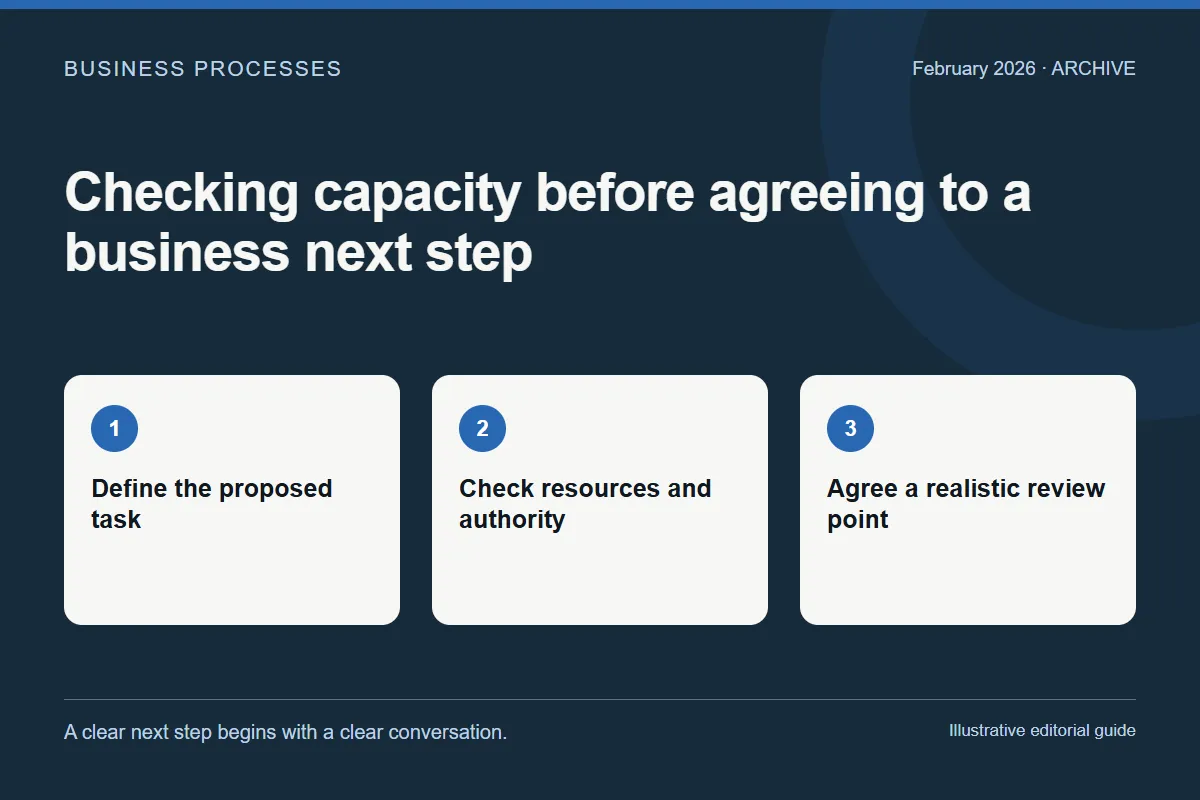
February 2026: Checking capacity before agreeing to a business next step
Retrospective archive for February 2026. Prepared on 6 October 2026; this is not an original article from that period.
A positive introductory discussion can move faster than the organisation’s available capacity. February 2026 is a useful period for checking whether the people and information needed for the next step are actually available.
Context for the period
The RBA’s February 2026 overview described stronger growth and inflation than previously expected, with continuing capacity constraints. Read the contemporary RBA overview.
A practical approach
Describe the task being considered and the decisions it depends on. Identify the responsible person and any approval required. Separate willingness to explore from agreement to deliver. Where availability is uncertain, offer a review point instead of an unsupported completion promise.
An illustrative example
For example, a hypothetical supplier review needs input from two internal contacts before a proposal can be assessed. The business confirms when those people can contribute and tells the supplier what information is needed meanwhile. The resulting plan has a realistic next action. Record any change to the review date so expectations do not drift.
Three points to take into the conversation
- Define the proposed task
- Check resources and authority
- Agree a realistic review point
Before progressing the conversation, check that the purpose, current information, responsible contact and next review date are clear. For a corporate-information, supplier or partnership enquiry, contact EJN Services through its own enquiry route.
The economic context comes from the report linked above. The process suggestions and examples are original editorial guidance, not RBA recommendations or records of EJN Services engagements.
