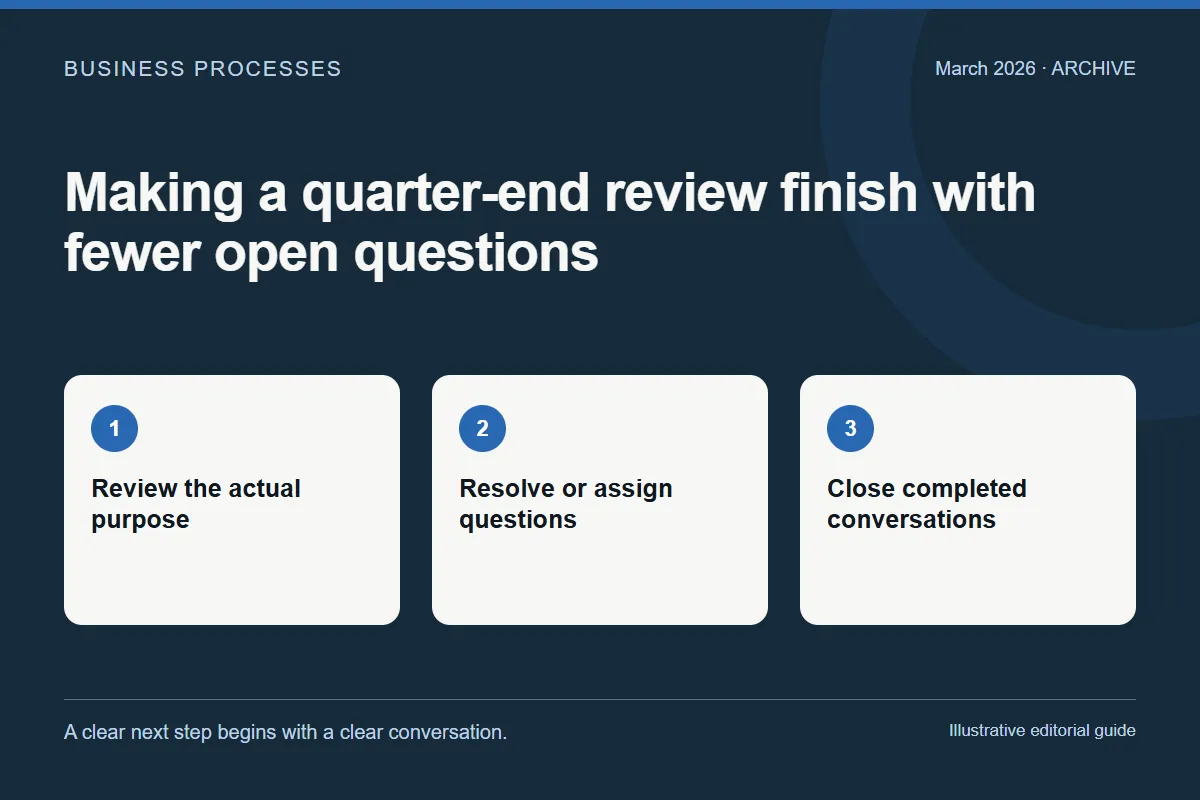
March 2026: Making a quarter-end review finish with fewer open questions
Retrospective archive for March 2026. Prepared on 6 October 2026; this is not an original article from that period.
A quarter-end review is useful when it reduces uncertainty about what to do next. In March 2026, use the enquiry register to identify decisions that can be made, questions that need evidence and items that can be closed.
Context for the period
The RBA’s February 2026 overview described stronger growth and inflation than previously expected, with continuing capacity constraints. Read the contemporary RBA overview.
A practical approach
Review each active item against its current purpose. Ask whether the latest notes explain the stage, responsible person and obstacle to progress. Consolidate repeated questions. Keep claims about business results separate from the process review unless genuine evidence supports them.
An illustrative example
A hypothetical partnership enquiry has several notes but no clear trial question. The review assigns preparation of a limited proposal before another meeting is arranged. Another enquiry is closed because the sender confirms it is no longer relevant. Those explicit outcomes make the register more useful than a growing list of items labelled “ongoing”.
Three points to take into the conversation
- Review the actual purpose
- Resolve or assign questions
- Close completed conversations
Before progressing the conversation, check that the purpose, current information, responsible contact and next review date are clear. For a corporate-information, supplier or partnership enquiry, contact EJN Services through its own enquiry route.
The economic context comes from the report linked above. The process suggestions and examples are original editorial guidance, not RBA recommendations or records of EJN Services engagements.
