September 2026: Checking spring business plans against current supplier assumptions
Retrospective archive for September 2026. Prepared on 6 October 2026; this is not an original article from that period.
A spring plan can rely on supplier information gathered months earlier. September 2026 is a practical checkpoint for confirming that the specification, availability and proposed delivery conditions still match the decision ahead.
Context for the period
The RBA’s August 2026 overview described elevated inflation, input-cost pressures and an economy still facing capacity constraints. Read the contemporary RBA overview.
A practical approach
Identify the active requirement and compare it with the latest supplier response. Ask for an update where timing, quantity or conditions have changed. Keep uncertainty visible and distinguish a revised proposal from an accepted variation. Assess the specific offer through the organisation’s appropriate commercial process.
An illustrative example
A hypothetical purchase now needs a different delivery window. The business asks the supplier to confirm feasibility against the revised requirement and records the answer with the current brief. If the response is provisional, the reviewer notes what must be confirmed before approval. This gives the spring plan an identifiable next decision.
Three points to take into the conversation
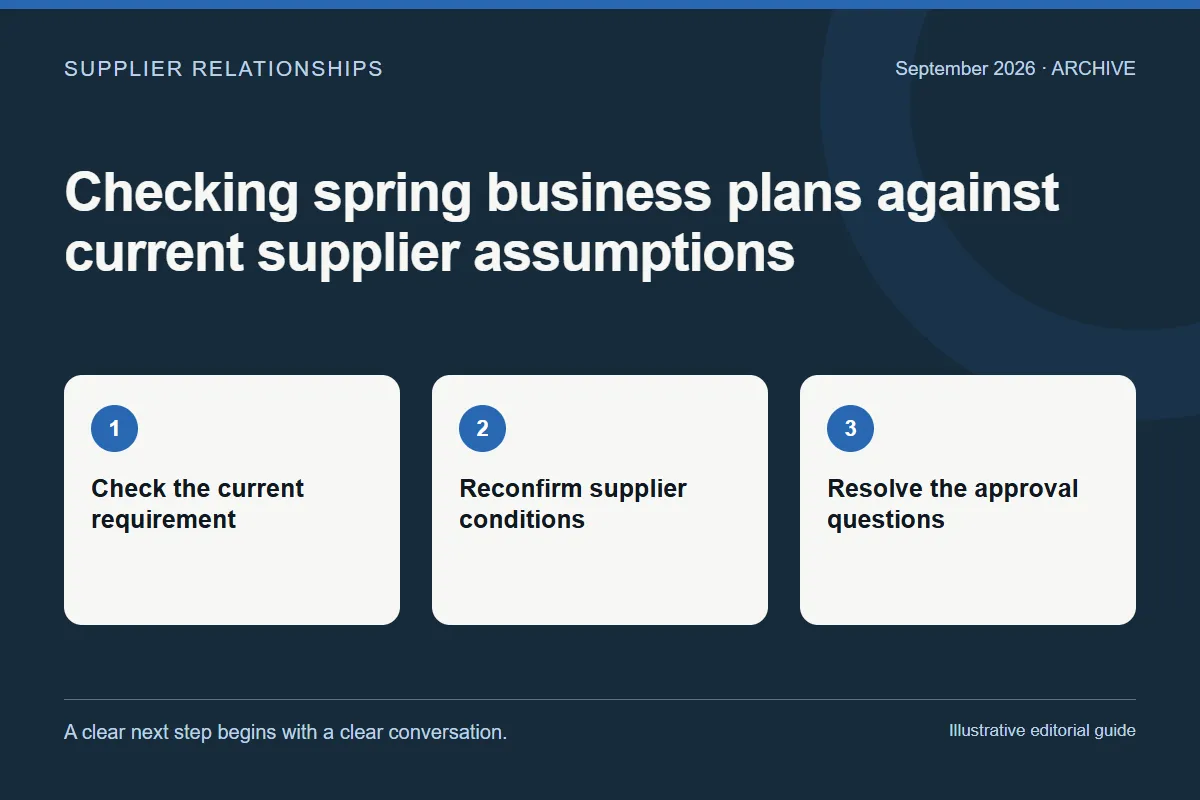
- Check the current requirement
- Reconfirm supplier conditions
- Resolve the approval questions
Before progressing the conversation, check that the purpose, current information, responsible contact and next review date are clear. For a corporate-information, supplier or partnership enquiry, contact EJN Services through its own enquiry route.
The economic context comes from the report linked above. The process suggestions and examples are original editorial guidance, not RBA recommendations or records of EJN Services engagements.
