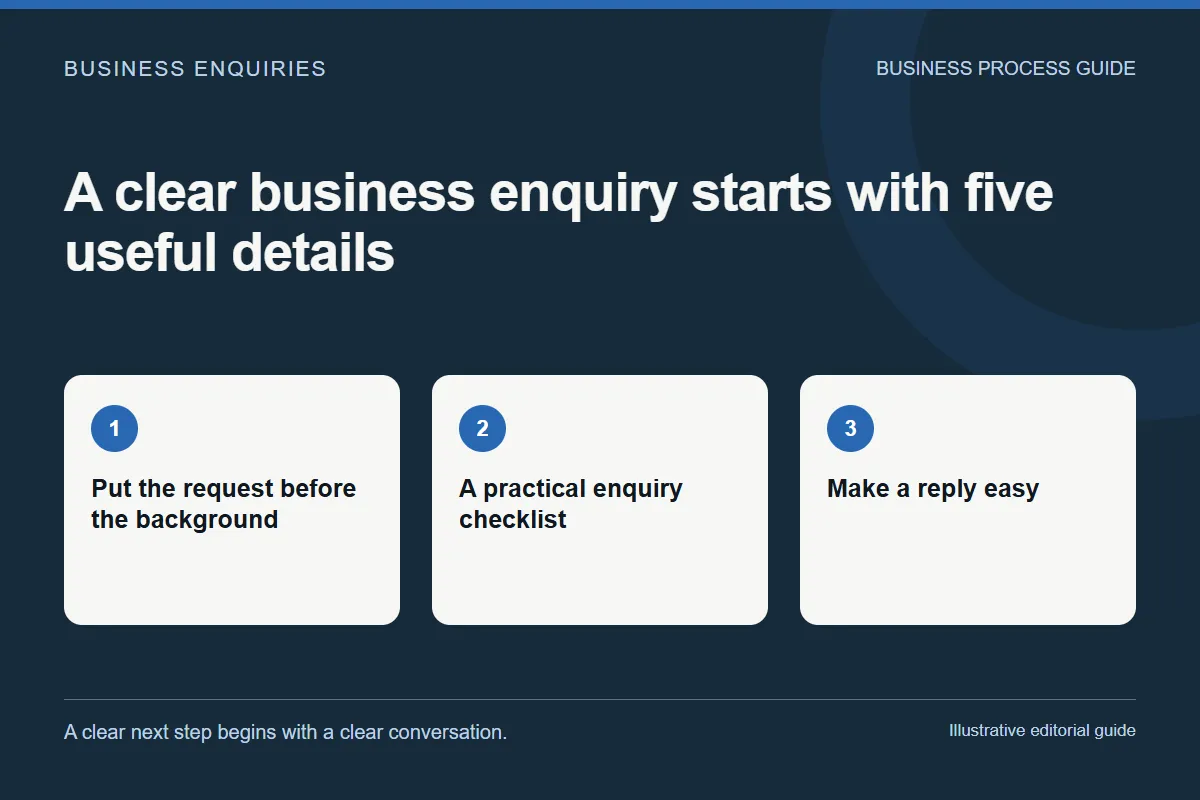
A clear business enquiry starts with five useful details
A useful first enquiry gives the recipient enough context to decide what should happen next. A long company history is rarely the best starting point. Lead with the reason you are getting in touch and the decision you want to make.
Put the request before the background
Explain your organisation, the subject of your enquiry and the outcome you are seeking. If there is a real deadline, include it and explain its significance. Distinguish a preferred date from a fixed commitment so the recipient can respond accurately.
Attach a short, relevant brief only when it adds something the message cannot explain. Avoid sending confidential contracts, identification documents or large archives in an unsolicited introduction.
A practical enquiry checklist
- Your business name and a suitable reply contact.
- The reason for the enquiry in one sentence.
- The decision or conversation you are requesting.
- Any timing or information constraints.
- A sensible next step, such as a reply or introductory discussion.
Make a reply easy
Ask one clear question. If you need several answers, number them and identify the most important one. A recipient should be able to understand the request without opening every attachment.
For example, a supplier introduction can explain the category supplied, the area served and the type of opportunity being explored. There is no need to claim that an engagement exists before both parties have discussed it.
Review the message once from the recipient's perspective: can they tell what you need and what to do next? That small check makes the introduction easier to assess.
General business-process information. Check the circumstances and seek appropriate professional advice for contractual, legal or specialist decisions.
Further reading
For a corporate enquiry, contact EJN Services.
