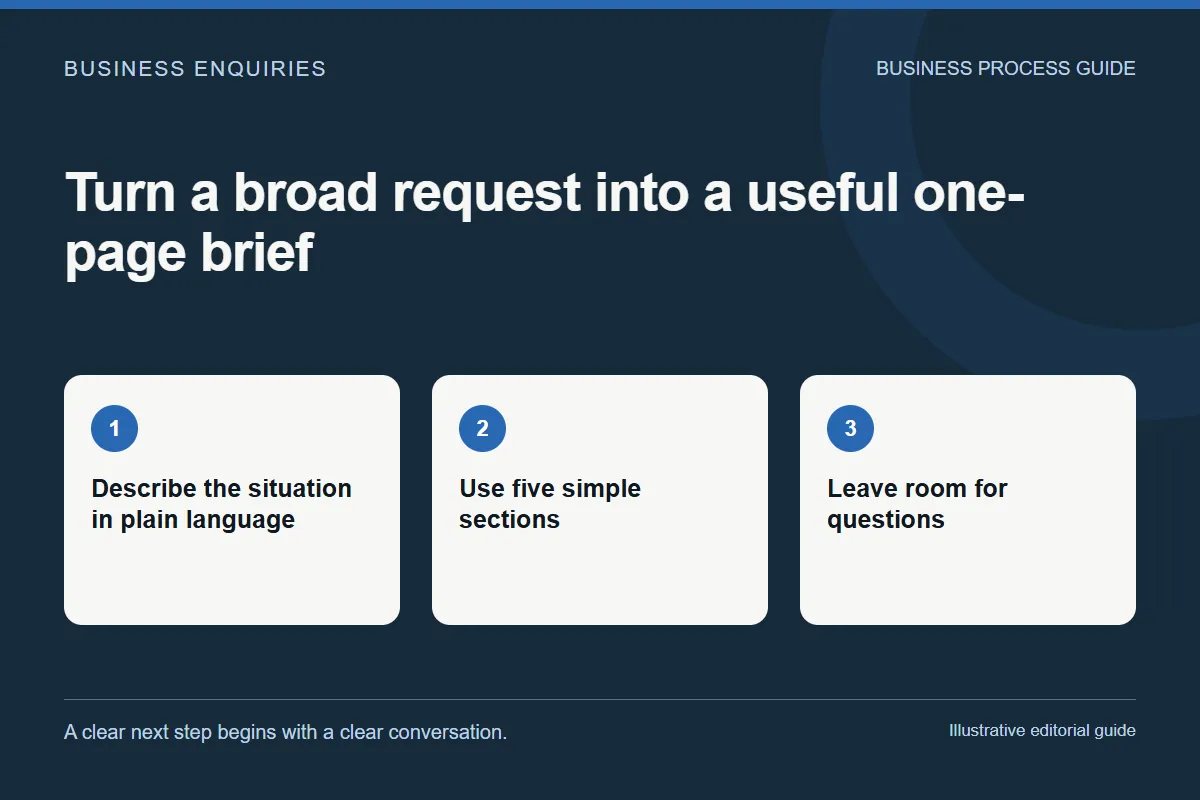
Turn a broad request into a useful one-page brief
“We need help with the business” can mean many different things. A one-page brief gives a conversation a useful starting point without pretending that every requirement is already known.
Describe the situation in plain language
Write what is happening now, why it matters and what a better situation would look like. Keep observations separate from explanations. “Three approvals are still outstanding” is an observation; the reason for the delay may need investigation.
Add the boundaries of the request. A brief should say which activities, locations or decisions are included and which are outside the current conversation.
Use five simple sections
- Context: the current situation.
- Outcome: the change or decision required.
- Boundaries: what is included and excluded.
- Constraints: timing, dependencies and available resources.
- Next step: what you want the recipient to do.
Leave room for questions
A brief is useful even when some answers are unknown. Mark those gaps explicitly instead of filling them with guesses. “Budget to be confirmed” is more honest than presenting an unsupported figure as a commitment.
You can also list the evidence available: existing process notes, approved business information or a simple description of the issue. Keep confidential material out of an introductory brief until sharing arrangements are clear.
Before using the document, ask a colleague to explain the request back to you. If their understanding is different, revise the brief. The finished page should help the next conversation identify what can be agreed, what needs investigation and who should be involved.
General business-process information. Check the circumstances and seek appropriate professional advice for contractual, legal or specialist decisions.
Further reading
For a corporate enquiry, contact EJN Services.
